
Need food? Find resources in your neighborhood
When a neighbor walks through our doors, food is often the first thing on their mind, and it should be. It’s hard to focus on a job interview, a doctor’s appointment, a rent payment, or even a child concentrating in school when you don’t know where your next meal is coming from.
Hunger rarely shows up alone. It’s connected to housing, health, income, transportation, education, and so much more. That’s why our new campus is built around a simple idea: food first, but not food alone.
This space is designed to meet immediate needs while creating pathways to long-term stability. From nourishing meals and essential resources to connections that support health, employment, and opportunity, our campus is designed to help neighbors thrive. It’s a place where people can find support for today and build toward tomorrow—with dignity, choice, and hope at every step.
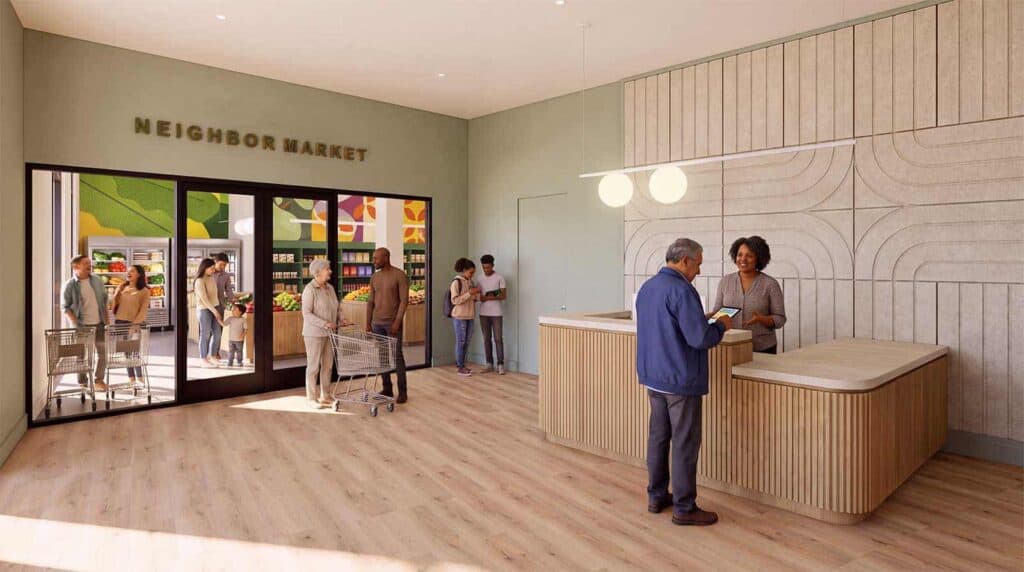
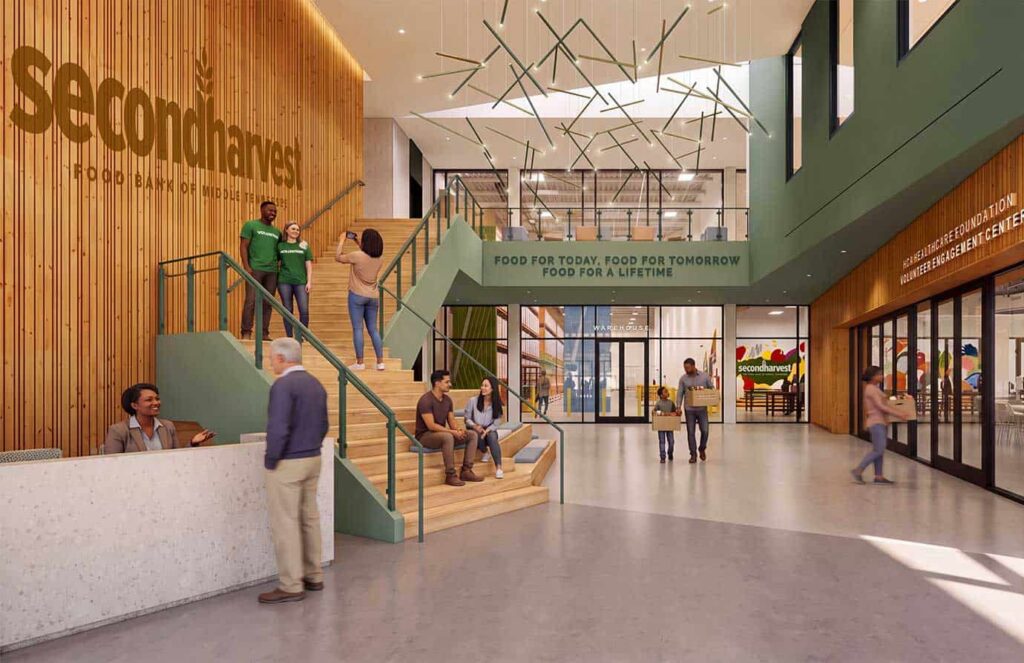
The Frist Foundation Neighbor Care Center is the hub of our new campus: a welcoming entry point where neighbors connect with high-touch, comprehensive services that guide them to exactly what they need.
The Market is our first onsite choice pantry: a grocery store where neighbors shop for fresh produce, dairy, protein, and shelf-stable essentials at no charge. Neighbors choose foods that fit their family’s tastes, cultural, and health needs, just like at any grocery store. Knowing they’ll leave with the food they need gives neighbors the peace of mind to explore other support. And with our warehouse right next door, shelves stay stocked all day.
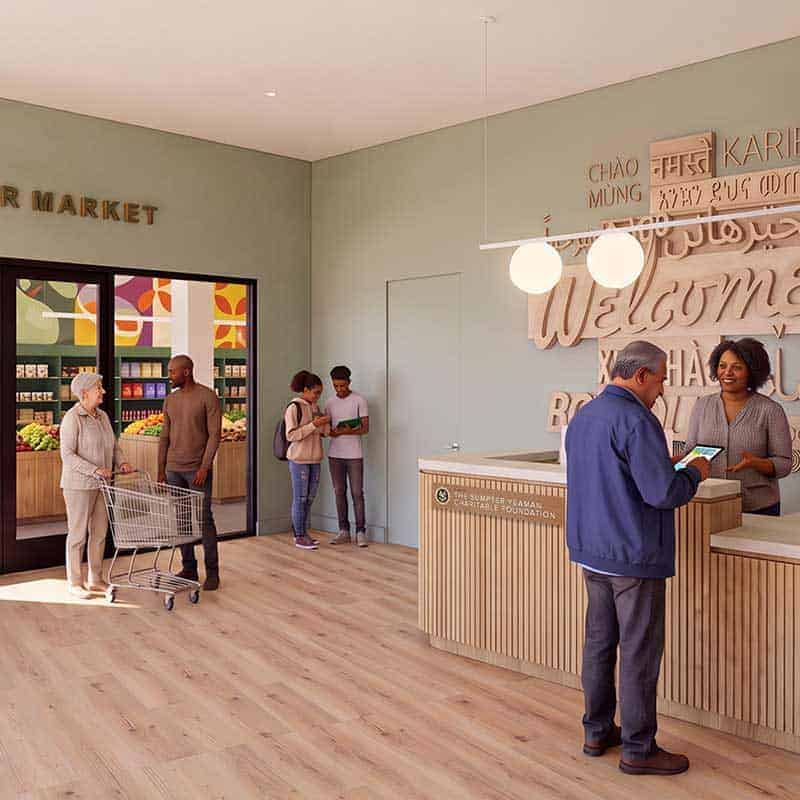
A family facing hunger may also be navigating a housing crisis, a health concern, or a job search, often at different offices across town with different forms and different bus routes. By bringing food and services together under one roof, we save neighbors time, ease the stress of starting over at every door, and make it easier to take the next step forward.
More than 20 nonprofit Partners will work side by side in the Neighbor Care Center, offering services tailored to children, families, older adults, and veterans, including:
Inside the Neighbor Care Center, the Learning Lab will host classes built around what neighbors tell us they need, from language classes to banking and budgeting workshops led by local financial partners.
Next door, the Opportunity Center is dedicated to workforce development. It gives our 10-week job training program a home of its own, where neighbors can build skills and confidence for steady, meaningful work.
Our team goes further than a phone number on a handout. If a neighbor needs help from a nonprofit that isn’t on site that day, we’ll make the call, set up the appointment, and follow up on what might stand in the way, like getting a ride there. As one of our Partners put it, “I’m not handing you off to an organization. I’m handing you off to a person.”
One kitchen, two missions: feeding neighbors today and building culinary careers for tomorrow.
The Culinary Center is a 5,700-square-foot production and teaching kitchen. It’s the engine behind our dietitian-designed frozen meals, pre-cooked proteins, and our famous tomato sauce.
Our current kitchen produces about 5,000 frozen meals each month and is working at full capacity. At the same time, many neighbors are looking for skills that lead to steady, meaningful work.
In our new Culinary Center, one space will serve as:
A meal meets today’s need. A new skill can change a family’s future for good.
Inspired by our Project Grow program, the Community Garden is a hands-on place of learning for neighbors, volunteers, and partners to learn sustainable agriculture and grow fresh produce in raised beds or directly in the soil.
Fresh fruits and vegetables are essential to good health, yet they can be difficult for families facing hunger to access and afford. Our new 23-acre campus will provide the space needed to add a garden to grow and learn.
What we harvest will be used in our nutrition education classes and go directly to neighbors through our distribution network. Hands-on classes teach growing practices families can use at home, and everyone is welcome to dig in alongside us.
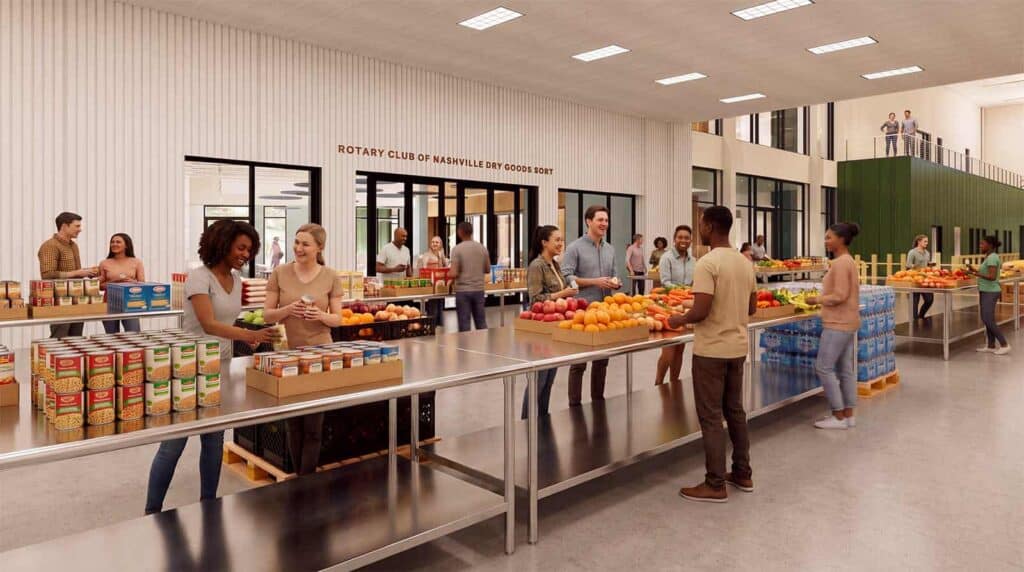
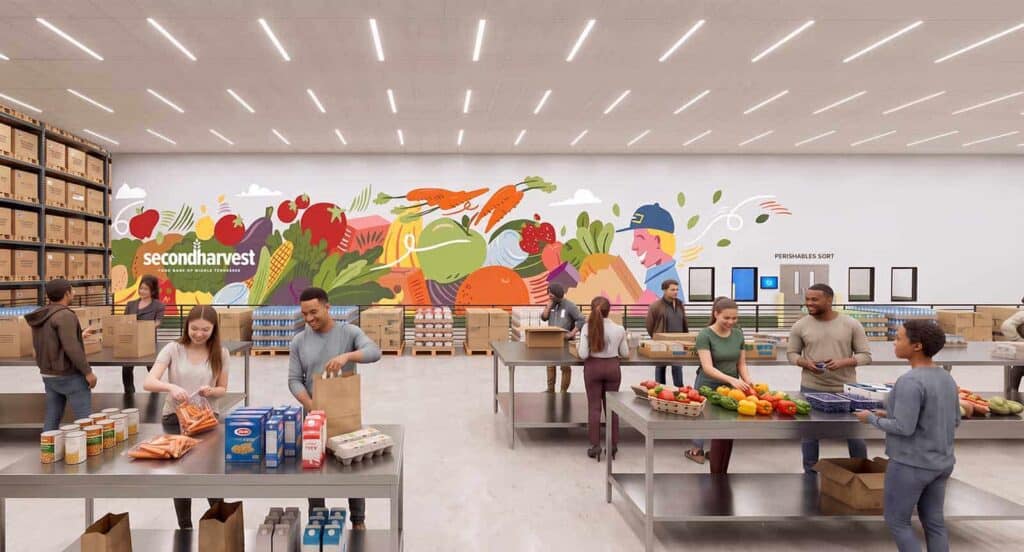
For nearly 50 years, volunteers have powered our mission. The Volunteer Engagement Center gives them a home built for what’s next: 15,650 square feet dedicated to orientation, training, dry good sort, and perishable sort.
Last year, volunteers gave 84,500 hours while we operated at maximum capacity. Today, space and parking limit how many volunteers we can welcome at once.
At 2.3x larger than our current space, the center welcomes volunteers for a single shift or a lifetime of service. It offers:
Every pound of food we distribute passes through the warehouse: received, sorted, stored, and staged for delivery across our 46-county region.
Our current warehouse is landlocked in a dense commercial neighborhood. Our fleet parking is limited, and pallets take up cooler space that should be holding fresh food.
On many days, our warehouse runs at more than 90% capacity. When space is that tight, food gets stored and typically has to be moved again later, costing time that should go toward getting food to neighbors.
Our new warehouse will double the amount of food we rescue and distribute.
Sometimes manufacturers have perfectly good food that never makes it into retail packaging, like cereal delivered in bulk bags taller than a person. No family can use food in that form, and today we have very limited space to break it down. Our new clean room changes that. Volunteers and staff will repackage bulk food into family-sized portions, opening the door to surplus we can’t accept today.
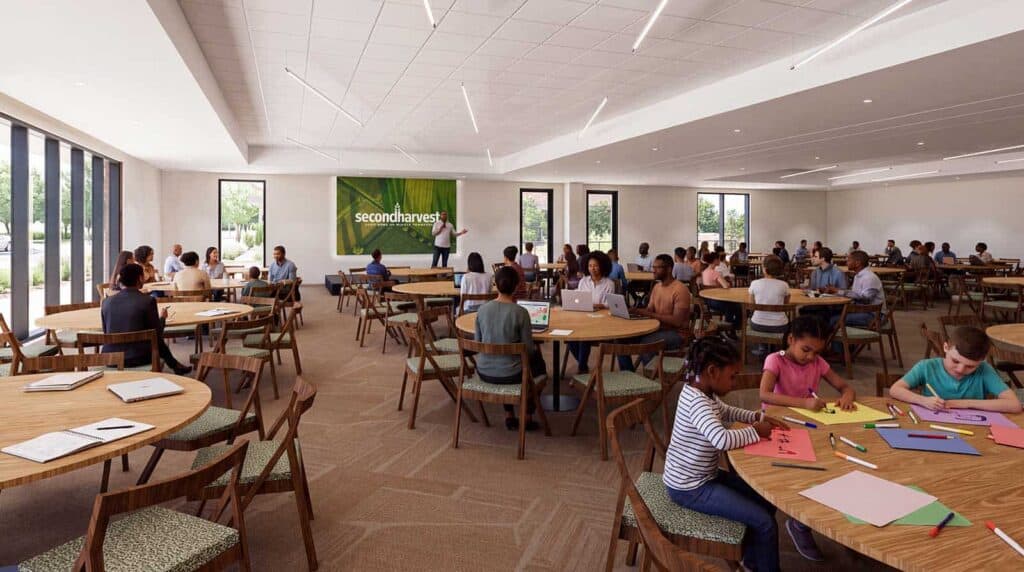
The Community Center is a flexible gathering space with room for up to ~300 seated guests, served by our Culinary Center. It’s designed to be a true community hub where nonprofits, schools, businesses, volunteers, and neighbors come together.
Groups ask to use our space all the time, and today we can only offer one meeting room. When it’s booked, we have to say no. And in a growing city, finding a meeting spot with safe, reliable, and affordable parking isn’t easy.
The Community Center gives our region room to gather around the mission:
When organizations gather, share what works, and build relationships here, neighbors across our region benefit.
“Today, we have to hand someone a phone number and say, ‘Call this organization,’ for the services we don’t offer ourselves. Once these doors are open, we’ll be able to say, ‘Let’s walk next door and get you some help with that.”
- Martha Silva, Co-Executive Director, Conexion Americas (a Second Harvest Partner)
Want to learn more about our vision for the new campus? We'd love to talk with you.
To provide the best experiences, we use technologies like cookies to store and/or access device information. Consenting to these technologies will allow us to process data such as browsing behavior or unique IDs on this site. Not consenting or withdrawing consent, may adversely affect certain features and functions.